Basil Powder
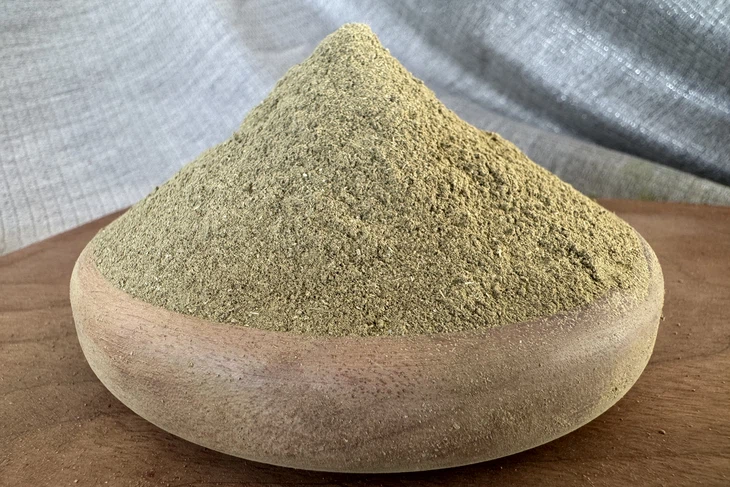
What is Basil Powder?
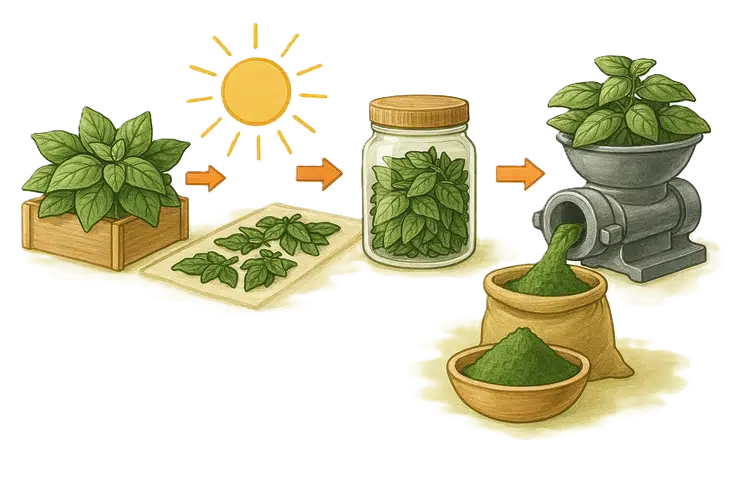
Basil powder is produced by drying fresh basil and grinding the resulting product.
How to Store Basil Powder?
Dried basil powder has a minimum shelf life of 1 year when stored under proper conditions. There are 3 main factors that reduce this period:
- Humidity
- Sunlight
- High temperature
To prevent a shortened shelf life, it should be kept in its own packaging in a cool, dry, and dark environment.
Where is Basil Powder Used?
1. Food and Beverage Industry
- Spice and Flavoring: Basil is used as a flavoring spice in many dishes.
- Natural Sweetener and Flavoring: It is used as a natural flavoring in pesto sauce, pasta sauces, pizza sauces, and various meat dishes.
- Functional Foods and Beverages: Due to its antioxidant properties, basil is used in functional beverages and functional snacks.
2. Cosmetics and Personal Care Industry
- Skincare: It is used in skincare products due to its anti-inflammatory properties.
- Aromatherapy Products: It is used in essential oils, candles, and room sprays due to its relaxing effect.
- Natural Soap and Shampoo: It can be found in personal care products due to its refreshing and cleansing effects.
3. Herbal Supplement Products
- Nutritional Supplements: Due to its antioxidant properties, it is used in nutritional supplements for stress management and digestive system support.
- Herbal Teas: It is found in herbal tea blends due to its relaxing and calming effect.
4. Pharmaceutical Industry
- Natural Pharmaceutical Raw Material: Used in some natural drug formulations due to its anti-inflammatory and antioxidant properties.
- Laboratory Research: Pharmacological studies are conducted on basil.
Nutritional Values: Fresh vs Dried Basil (USDA Data)
| Nutrient | Fresh Basil (100 g)USDA ID: 170393 | Dried Basil (100 g)USDA ID: 170394 | Change |
|---|---|---|---|
| Water | 92.06 g | 10.35 g | -88.8% |
| Calories | 23 kcal | 233 kcal | +913% |
| Protein | 3.15 g | 22.98 g | +629% |
| Fat | 0.64 g | 4.07 g | +536% |
| Carbohydrates | 2.65 g | 47.75 g | +1702% |
| Fiber | 1.6 g | 37.7 g | +2256% |
| Sugar | 0.30 g | 1.71 g | +470% |
| Calcium | 177 mg | 2240 mg | +1165% |
| Iron | 3.17 mg | 89.8 mg | +2733% |
| Magnesium | 64 mg | 711 mg | +1011% |
| Phosphorus | 56 mg | 274 mg | +389% |
| Potassium | 295 mg | 3430 mg | +1063% |
| Sodium | 4 mg | 34 mg | +750% |
| Zinc | 0.81 mg | 7.10 mg | +777% |
| Vitamin C | 18.0 mg | 0.80 mg | -96% |
| Thiamin (B1) | 0.034 mg | 0.080 mg | +135% |
| Riboflavin (B2) | 0.076 mg | 1.200 mg | +1479% |
| Niacin (B3) | 0.902 mg | 6.500 mg | +621% |
| Vitamin B6 | 0.155 mg | 1.070 mg | +590% |
| Folate (DFE) | 68 μg | 310 μg | +356% |
| Vitamin A (RAE) | 264 μg | 744 μg | +182% |
| Vitamin E | 0.80 mg | 10.5 mg | +1213% |
| Vitamin K | 414.8 μg | 1714 μg | +313% |
Scientific Notes:
- Source: USDA FoodData Central - Type codes: 170393 (fresh), 170394 (dried)
- Methodology: AOAC official analysis methods
- Key Point: High increase rates are due to the concentration effect caused by water loss
Reference Studies
- USDA Agricultural Research Service. FoodData Central. U.S. Department of Agriculture.2023
- Makri, O., & Kintzios, S. (2008). "Ocimum sp. (basil): Botany, cultivation, pharmaceutical properties, and biotechnology" Journal of Herbs, Spices & Medicinal Plants, 13(3), 123-150.
- Hossain, M.B., et al. (2010). "Effect of drying methods on the antioxidant capacity of six Lamiaceae herbs" Food Chemistry, 123(1), 85-91.
Usage Areas of Our Dried Products
General Information:
Your comments and feedback after using basil powder are very valuable to us for improving ourselves. Please consult the relevant professionals before consuming the product. Information on our website, such as nutritional values, benefits, possible risks, intended uses or side effects, was compiled from scientific sources while the site was being developed. Positive or negative comments, benefits and risks mentioned in the examples about the product may vary from person to person. Technical information such as photos, approximate waste rates, how to use it, how to consume it, intended uses, how it is made and how it is produced is provided to introduce the varieties and general characteristics of basil powder. The basil powder you purchase may differ because of factors such as the raw material variety, the drying technique, the raw material producer or the supply region. Wholesale quantities, prices, package weights, points of sale and areas of use may vary.