Dried Pomegranate Seeds
Price Comparison of Fresh Pomegranate vs. Dried Pomegranate per kg
How Much Waste: About 10 kg of fresh product is used to obtain 1 kg of dried pomegranate seeds-50 grams. (The ratio may vary with the type of fresh product, drying method, moisture level and production parameters.)
Dried product price per kg:
Advantages of Using Dried Pomegranate
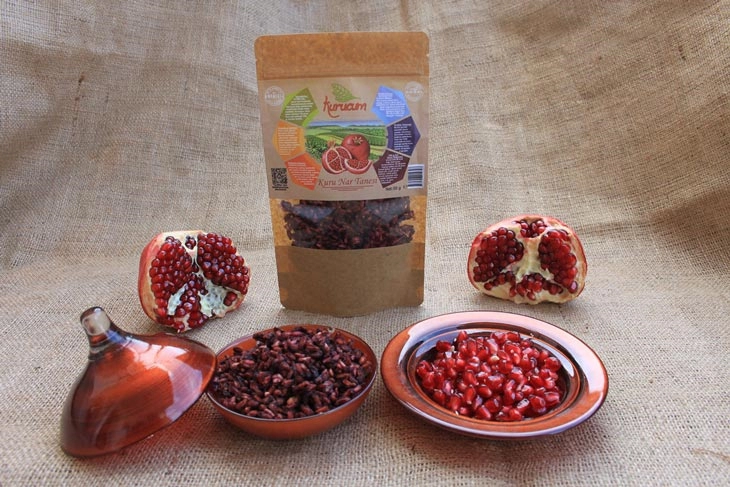
Using 10 kg of fresh pomegranate in a crate, approximately 1 kg of dried pomegranate seeds is obtained, which can fit into a small jar.
Due to the reduction in volume, the space required for storage is significantly reduced. Compared to the fresh product, the required volume is reduced to approximately 1/10.
Due to the reduction in volume and weight, it has become an easy-to-transport product. A truckload of fresh pomegranate can fit into 2 pallets when dried.
It does not need to be stored in cold storage conditions. Keeping it in a cool, dry, and dark place is sufficient for dried pomegranate storage conditions.
The growth rate of bacteria is proportional to the water content in dried pomegranate seeds. During the drying process, as the water content of fresh pomegranate drops from 90% to 10%, water activity decreases, limiting bacterial growth in dried pomegranate seeds. Limiting bacterial growth ensures a much longer shelf life.
The historical development of dried products has generally occurred during periods of famine and war. Products like dried pomegranate are strategic products for Turkey due to their long shelf life and ease of transport in terms of sustainable food production.
As Kurucum Food, we continue to develop technologies related to dried pomegranate production in partnership with our sister company, Eksis Industrial Drying Systems, which is a manufacturer of drying technologies. Our projects related to dried pomegranate:
Pomegranate juice powder production
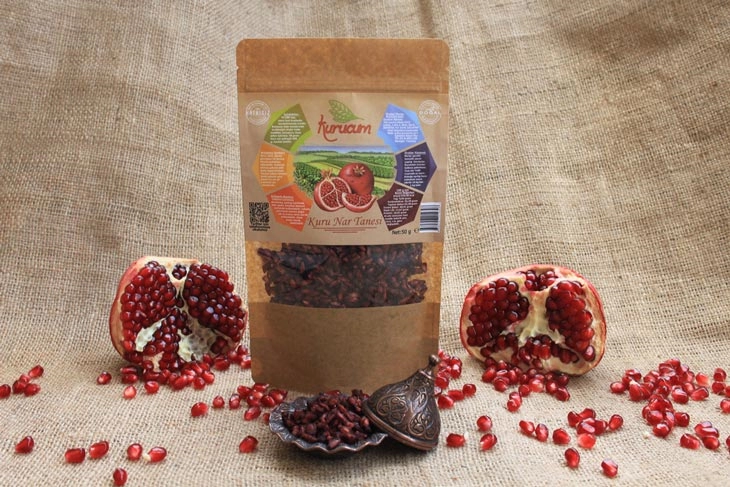
Dried Pomegranate Arils Pack Contents:
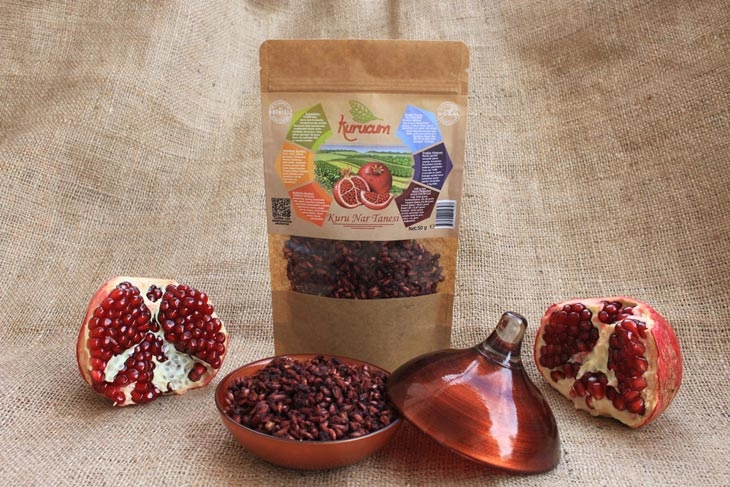
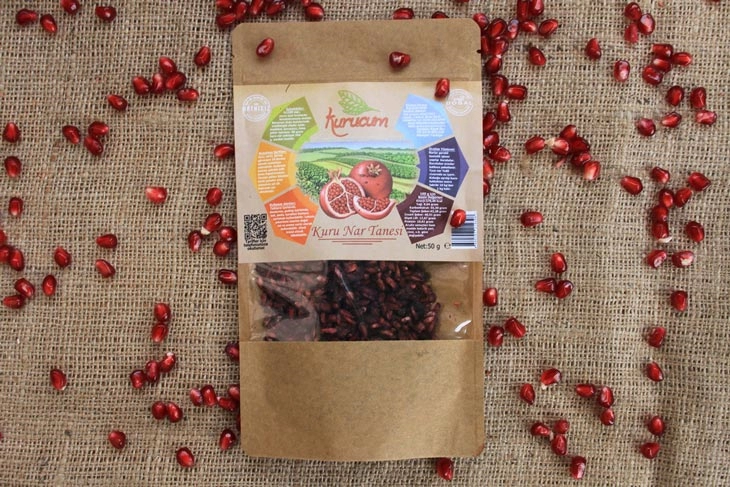
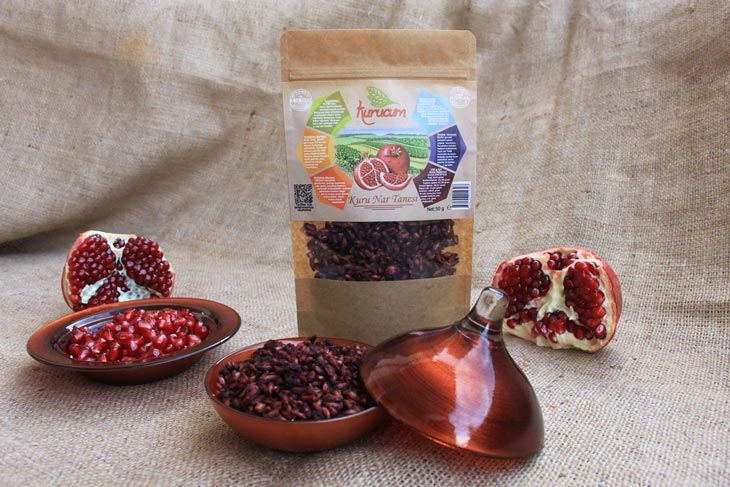
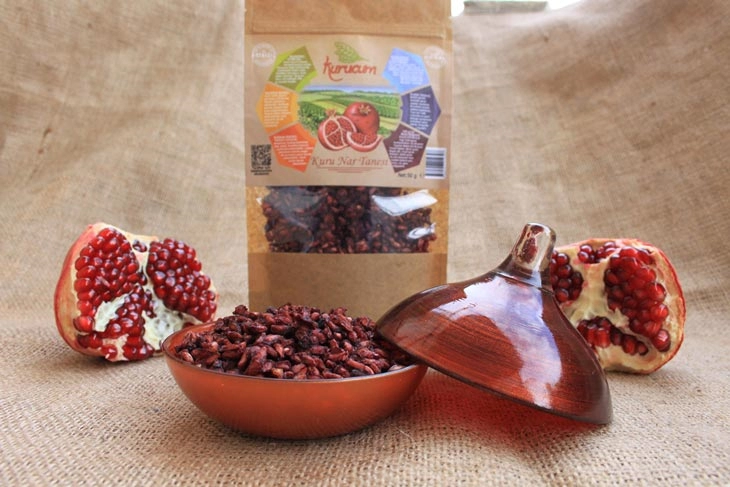
The dried pomegranate arils pack contains 50 g of dried pomegranate arils, offered for sale in a kraft resealable pouch. With the resealable pouch, you can use as much as you need at any time and reseal it for storage. It contains no additives, added sugar, or preservatives.
What Are Dried Pomegranate Arils?
Dried pomegranate arils are produced by drying fresh pomegranate arils in specialized machines and packaging them after production. Fresh pomegranate arils contain approximately 80% water before drying. Through the drying process, the water content in the fresh product is reduced to very low levels. After removing the peel and drying, approximately 1 kg of dried pomegranate arils is obtained from 10 kg of fresh pomegranate arils. During the drying process, the water in the fresh product is removed, and while the water percentage decreases, the ratio of the essence increases. Consequently, the nutritional values of dried pomegranate arils, especially protein, carbohydrates, minerals, and fiber, are significantly concentrated. The sold pack is produced using approximately 500 g of fresh pomegranate.
Where Are Dried Pomegranate Arils Used?
What Is Its Role in Industrial Production?
Beverage Manufacturers:
- Fruit Tea Blends: Dried pomegranate is used in tea blends to provide flavor and color. It can be used in beverages such as winter tea, fruit tea, and detox tea.
- Tea Bag and Instant Tea Manufacturers: Pomegranate can be used as a natural flavoring agent in tea bags and instant fruit teas.
Where Can It Be Used in Food Production:
- Dessert and Snack Manufacturers: Dried pomegranate can be used in products such as desserts, puddings, and snacks. It is also found in chocolates and confectionery as a sweetener and coloring agent.
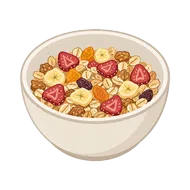
- Muesli and Breakfast Products: Pomegranate can be used as a flavoring and coloring agent in muesli, granola, breakfast cereals, and other breakfast products.
- Biscuit, Cake, and Bakery Manufacturers: Pomegranate can be used in biscuits, cakes, and pastries for both flavor and decoration.
How Is It Used in Functional Food Products:
- Dietary Products and Snacks: Dried pomegranate can be consumed as a plant-based snack. Due to its low-calorie nature, it can be preferred in diet products.
- Detox and Digestive Products: Pomegranate can be used in herbal teas and blends that support the digestive system and help eliminate toxins.
Medicinal Uses:
- Natural Flavors and Colorants: Pomegranate can be used as a natural flavoring and coloring agent in herbal teas, fruit beverages, and natural functional drinks.
- Antioxidant Effect: Thanks to the antioxidants it contains, pomegranate neutralizes free radicals in the body, strengthens the immune system, and supports cell regeneration.
Home Uses:
Homemade Beverages:
- Tea Blends and Drinking Water: Dried pomegranate can be brewed with hot water to make a natural fruit tea. It can also be used in pomegranate juice or mixed fruit beverages.
- For Detox: Pomegranate can be used as a natural sweetener and nutrient source in detox teas.
Snack Use:
- In Snacks: Dried pomegranate can be consumed directly as a snack or in functional snacks. It also pairs well with yogurt and cereal mixes.
- Homemade Desserts: Pomegranate is a great ingredient for homemade desserts and puddings, adding a natural flavor and color to them.
White Sugar Alternative:
- Natural Sweetener: Pomegranate can be used as a natural sweetener for desserts and beverages. It can also be preferred instead of sugar.
Dessert Uses:
- Making Your Own Tea: Dried pomegranate can be brewed as tea, either directly or in blends. It can also be used as a coloring and flavoring agent in desserts and puddings.
- Biscuit and Cake Toppings: Pomegranate can be sprinkled over biscuits and cakes to add flavor and visual appeal.
Nutritional Value Comparison Table Between Dried Pomegranate Arils and Fresh Pomegranate Arils
| Nutrient | Fresh Pomegranate Arils (100 g) | Dried Pomegranate Arils (100 g) | Change % |
|---|---|---|---|
| Calories | 83 kcal | 325 kcal | +291% |
| Carbohydrates | 18.7 g | 75 g | +301% |
| Fiber | 4 g | 28 g | +600% |
| Sugar | 13.7 g | 50 g | +265% |
| Protein | 1.7 g | 4.5 g | +165% |
| Fat | 0.3 g | 1.5 g | +400% |
| Calcium | 10 mg | 40 mg | +300% |
| Iron | 0.3 mg | 2 mg | +566% |
| Potassium | 236 mg | 670 mg | +184% |
| Sodium | 3 mg | 7 mg | +133% |
| Vitamin C | 10.2 mg | 1 mg | -90% |
| Glycemic Index | 53 (medium) | 30 (low) | -43% |
References
- USDA FoodData Central. (2023). "Pomegranate, raw." U.S. Department of Agriculture. Retrieved from
- Journal of Food Composition and Analysis. Lee, Y., & Park, H. (2022). "Nutritional composition of fresh and dried pomegranate." Journal of Food Composition and Analysis, 109: 104499. DOI: 10.1016/j.jfca.2022.104499.
- Journal of Agricultural and Food Chemistry. Chen, W., et al. (2023). "Comparative analysis of fresh and dehydrated pomegranate seeds." J. Agric. Food Chem., 71(4): 1212-1220. DOI: 10.1021/acs.jafc.2c01112.
- Nutrients. Patel, R., & Wang, S. (2022). "Health implications of dried fruit and nutrient concentration." Nutrients, 14(7), 1505. DOI: 10.3390/nu14071505.
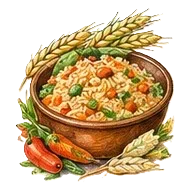
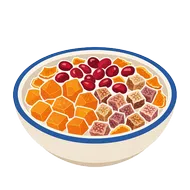
Usage Areas of Our Dried Products




General Information:
Your comments and feedback after using dried pomegranate seeds are very valuable to us for improving ourselves. Please consult the relevant professionals before consuming the product. Information on our website, such as nutritional values, benefits, possible risks, intended uses or side effects, was compiled from scientific sources while the site was being developed. Positive or negative comments, benefits and risks mentioned in the examples about the product may vary from person to person. Technical information such as photos, approximate waste rates, how to use it, how to consume it, intended uses, how it is made and how it is produced is provided to introduce the varieties and general characteristics of dried pomegranate seeds. The dried pomegranate seeds you purchase may differ because of factors such as the raw material variety, the drying technique, the raw material producer or the supply region. Wholesale quantities, prices, package weights, points of sale and areas of use may vary.