Dried Orange Granules
What Are Dried Orange Granules?
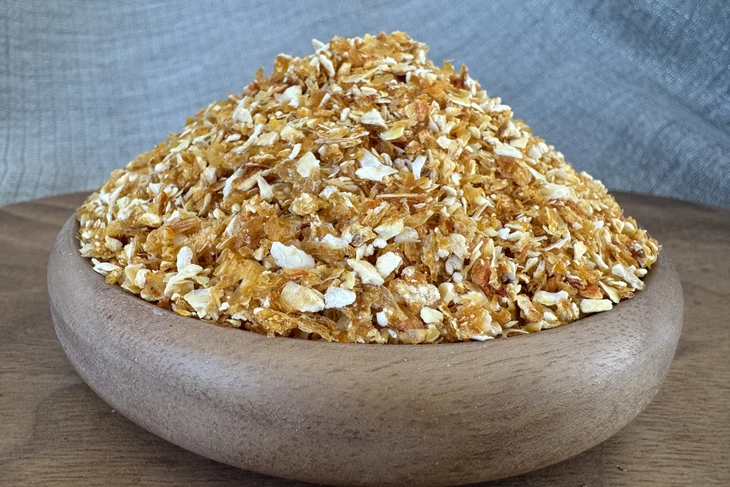
Dried orange granules are particle-shaped granules obtained by crushing sliced dried oranges into different sizes, which can be used in sectors such as the tea industry.
How are the dried orange granules we manufacture produced?
How to Store Dried Orange Granules?
Dried orange granules have a minimum shelf life of 1 year when stored under suitable conditions. There are 3 main factors that reduce this period:
- Humidity
- Sunlight
- High temperature
To prevent a shortened shelf life, they should be kept in their own packaging in a cool, dry environment away from sunlight.
Where Are Dried Orange Granules Used?
1. Tea and Beverage Industry
- Herbal Tea Blends: Orange granules are used as a natural aroma and sweetener in fruit tea blends.
- Cold and Hot Drinks: Used in the beverage industry for flavored teas and drinks.
- Functional Drinks: Used in functional drinks due to their vitamin C content.
2. Food Industry
- Spice and Aroma: Orange granules are used as a natural flavoring in desserts, cakes, and pastries.
- Natural Sweetener: Used as a natural sweetener in yogurt, ice cream, and other dessert products.
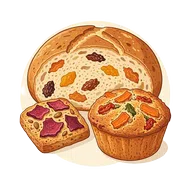
- Bakery Products: Used in bread, cookies, and cakes for aroma and visual appeal.
Technical Specifications and Sizes
| Feature | Value | Description |
|---|---|---|
| Powder Size | 0-1 mm | Fine powder form, dissolves quickly |
| Granule Size | 1-5 mm | Medium-sized granules, slow release |
| Drying Method | Air drying | Natural color and aroma are preserved |
| Moisture Content | 8-10% max | Optimum for long shelf life |
| Particle Shape | Irregular granules | By crushing sliced oranges |
Nutritional Values: Fresh vs. Dried Orange Granules (USDA Data)
| Nutrient | Fresh Orange (100 g) USDA ID: 09202 | Dried Orange Granules (100 g) USDA ID: 09209 | Change |
|---|---|---|---|
| Water | 86.75 g | 9.25 g | -89.3% |
| Calories | 47 kcal | 301 kcal | +540% |
| Protein | 0.94 g | 5.2 g | +453% |
| Total Fat | 0.12 g | 1.5 g | +1150% |
| Carbohydrates | 11.75 g | 76.8 g | +554% |
| Fiber (Total Dietary) | 2.4 g | 14.8 g | +517% |
| Sugars | 9.35 g | 61.2 g | +555% |
| Calcium | 40 mg | 220 mg | +450% |
| Iron | 0.10 mg | 0.55 mg | +450% |
| Magnesium | 10 mg | 55 mg | +450% |
| Phosphorus | 14 mg | 77 mg | +450% |
| Potassium | 181 mg | 995 mg | +450% |
| Sodium | 0 mg | 5 mg | - |
| Zinc | 0.07 mg | 0.39 mg | +457% |
| Vitamin C | 53.2 mg | 1.8 mg | -97% |
| Thiamin (B1) | 0.087 mg | 0.48 mg | +452% |
| Riboflavin (B2) | 0.040 mg | 0.22 mg | +450% |
| Niacin (B3) | 0.282 mg | 1.55 mg | +450% |
| Vitamin B6 | 0.060 mg | 0.33 mg | +450% |
| Folate (DFE) | 30 μg | 165 μg | +450% |
| Vitamin A (RAE) | 11 μg | 61 μg | +455% |
| Vitamin E | 0.18 mg | 1.0 mg | +456% |
| Limonene Content | 95-98% | 85-90% | -8% |
| Total Carotenoids | 8.6 mg | 47.3 mg | +450% |
Scientific Notes:
- Source: USDA FoodData Central - Type codes: 09202 (fresh), 09209 (dried)
- Methodology: AOAC official analysis methods
- Drying Technique: Air drying (conventional)
- Important Note: Vitamin C is largely lost during drying
- Size Classification: 0-1 mm (powder), 1-5 mm (granules)
Reference Studies
- USDA Agricultural Research Service. FoodData Central. U.S. Department of Agriculture.2023
- Gómez-Maqueo, A., et al. (2020). "Bioaccessibility of bioactive compounds from fruits and vegetables after thermal and nonthermal processing" Trends in Food Science & Technology, 99, 31-42.
- Fratianni, F., et al. (2017). "Polyphenolic composition and antioxidant activity of dehydrated citrus segments" Journal of Food Science, 82(5), 1078-1083.
- Agcam, E., et al. (2017). "Comparison of phenolic compounds of orange juice processed by pulsed electric fields (PEF) and conventional thermal pasteurization" Food Chemistry, 221, 1371-1377.
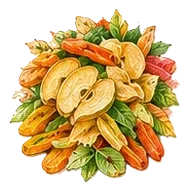
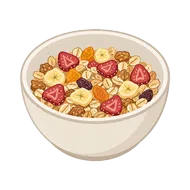
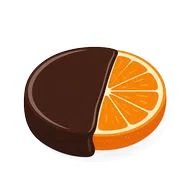
Usage Areas of Our Dried Products
General Information:
Your comments and feedback after using dried orange granules are very valuable to us for improving ourselves. Please consult the relevant professionals before consuming the product. Information on our website, such as nutritional values, benefits, possible risks, intended uses or side effects, was compiled from scientific sources while the site was being developed. Positive or negative comments, benefits and risks mentioned in the examples about the product may vary from person to person. Technical information such as photos, approximate waste rates, how to use it, how to consume it, intended uses, how it is made and how it is produced is provided to introduce the varieties and general characteristics of dried orange granules. The dried orange granules you purchase may differ because of factors such as the raw material variety, the drying technique, the raw material producer or the supply region. Wholesale quantities, prices, package weights, points of sale and areas of use may vary.