Potato powder
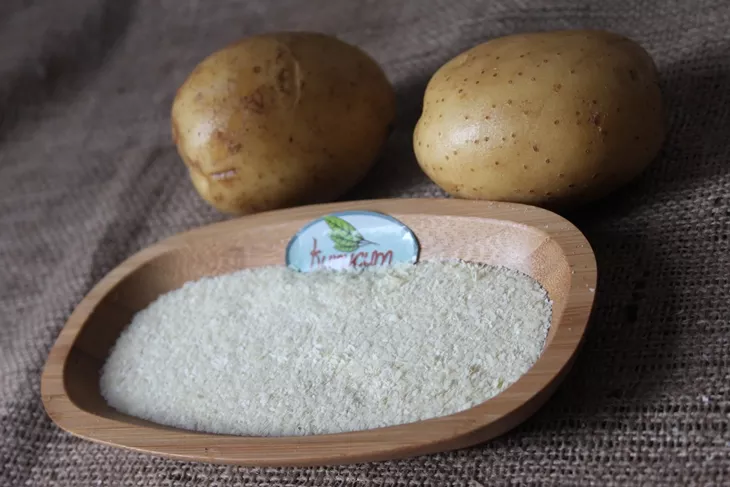
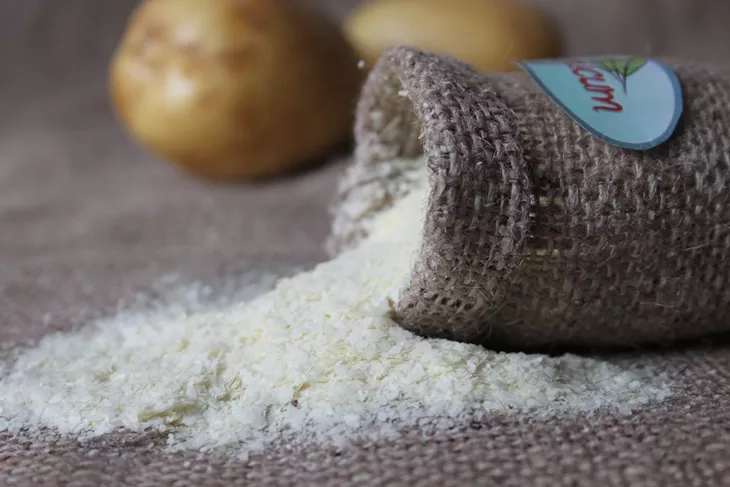
Price Comparison of Fresh Potato vs. Potato Powder per kg
How Much Waste: About 5 kg of fresh product is used to obtain 1 kg of potato powder. (The ratio may vary with the type of fresh product, drying method, moisture level and production parameters.)
Dried product price per kg:
Advantages of Using Potato Powder
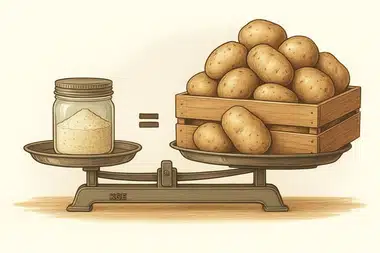
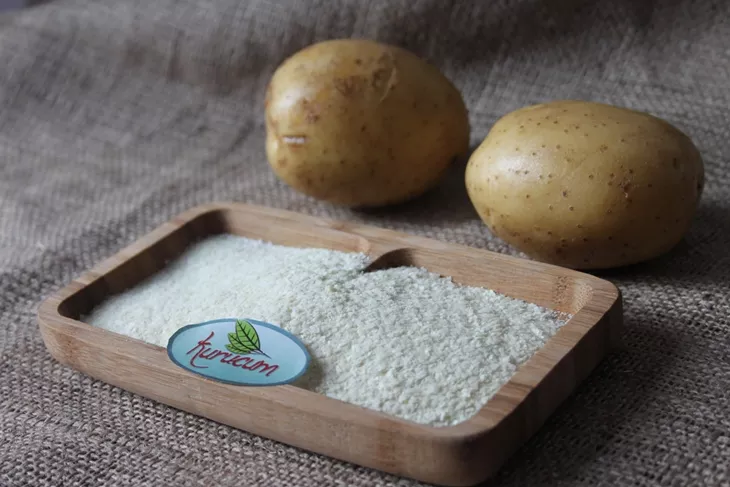
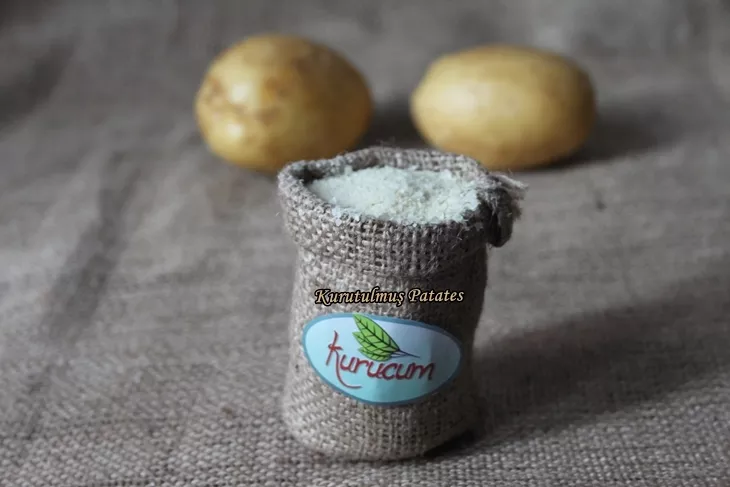
Using a 5 kg crate of potatoes, approximately 1 kg of potato powder is obtained, which can fit into a small jar.
Due to volume reduction, the space required for storage is significantly reduced. Potato powder decreases to approximately 20-25% of the volume of fresh potatoes.
Due to the reduction in volume and weight, it has become an easy-to-transport product. A truckload of fresh potatoes can fit into an area of approximately 4-5 pallets when turned into potato powder.
It does not need to be kept in cold storage conditions. A cool, dry, and dark place is sufficient for potato powder storage conditions.
The growth rate of bacteria is proportional to the water content in dried potato. During the drying process, the water content of fresh potatoes drops from 80% to 10%, which lowers water activity and limits bacterial growth in dried potatoes. Limiting bacterial growth ensures a much longer shelf life.
As Kurucum Food, we continue to develop potato powder products and production technologies in partnership with our sister company, Eksis Industrial Drying Systems, which is a manufacturer of drying technologies. Our projects related to dried potato:
Potato juice powder production.
What Is Potato Powder?
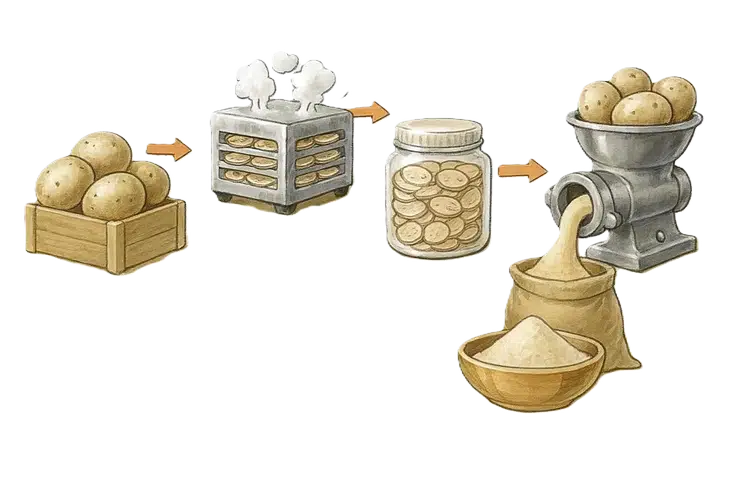
We can answer the question of what potato powder is as follows:
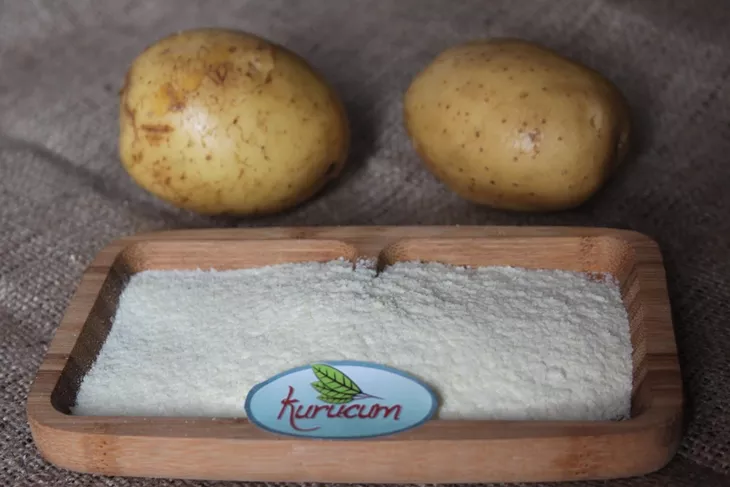
potato powder is a product obtained by drying and grinding fresh potatoes. Fresh potatoes contain approximately 80% water before drying. The drying process reduces this water content to very low levels, which causes the nutritional values of the potato to concentrate.Potato Powder Production
- Preparation of Fresh Potatoes: In the first step, fresh potatoes undergo the necessary pre-processing.
- Drying: Fresh potatoes are subjected to the drying process. During drying, water is removed, and the essence of the product remains.
- With the removal of water, the water activity of the product decreases, making it a product that can last for a long time.
- Approximately 1 kg of dried potato powder is produced from 5 kg of fresh potatoes.
- Nutritional Values: During the drying process, the carbohydrate, mineral, protein, and fat ratios of the potato increase significantly.
Potato Powder Varieties
- Potato powder
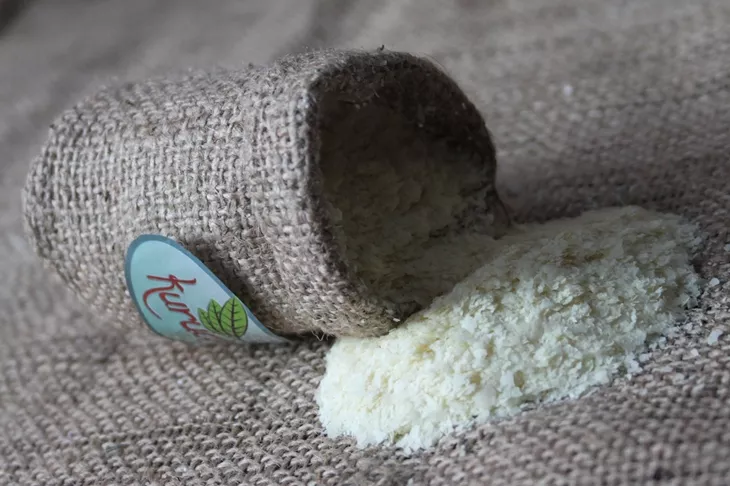
- Potato granules (mint size)
How to Store Potato Powder?
Dried potato powder has a minimum shelf life of 1 year when stored under suitable conditions. There are 3 main factors that reduce this period:
- Humidity
- Sunlight
- High temperature
To prevent the shelf life from shortening, it should be kept in its own packaging in a cool, dry environment away from sunlight.
Where Is Potato Powder Used?
What Is It Used for in Industrial Production?
1. Convenience Food Manufacturers
- Instant Soup and Meal Mixes:
Potato powder is used as a binder and thickener in instant soups and meals.- What It Does: Its mild flavor and starch content support the natural consistency of recipes.
- Usage Benefit: It provides ease of processing thanks to its quickly soluble structure.
2. Snack Manufacturers
- Chips and Potato-Based Products:
Potato powder is one of the main ingredients in chip production.- What It Does: Its homogeneous structure improves the texture and flavor of chips.
- Benefits: Increases product stability and shelf life.
3. Bakery and Pastry
- Bread, Cracker, and Cake Production:
In the bakery industry, potato powder is used to add lightness to baked goods.- Function: Acts as a binder in gluten-free recipes.
- Benefits: An economical and functional alternative.
4. Meat and Deli Products
- Sausage, Salami, and Nugget Production:
Potato powder increases water retention in meat products and acts as a binder.- Function: Its starch content provides structure to products.
- Benefits: Preferred as a natural additive.
5. Animal Feed Manufacturers
- Natural Feed Additive:
Potato powder is used as an energy source in animal feed.- Function: Its high carbohydrate content provides energy.
- Benefits: A natural and cost-effective feed ingredient.
6. Frozen Food Industry
- Instant Puree and Frozen Meals:
In frozen products, potato powder ensures quick preparation.- Function: Its soluble structure and smooth texture offer ease of use.
- Benefits: Preferred as a practical solution.
7. Vegan and Vegetarian Products
- Vegetable Patties and Alternative Products:
Acts as a thickener and binder in vegan recipes.- Function: Adapts to recipes thanks to its mild taste and workability.
- Benefits: Contributes to recipes that do not contain animal products.
Home Use and Applications
8. Homemade Soups and Meals
- Thick Soups and Stews:
Potato powder is preferred as a thickener in soups and meals.- Function: Its natural and mild flavor blends well with meals.
- Benefits: Offers effortless use.
9. Snacks and Crackers
- Homemade Chips and Crackers:
Potato powder can be used in snack recipes.- Function: Contributes to homemade recipes with its light texture and binding properties.
- Benefit: It is a practical and economical option.
10. Baby and Children's Food
- Vegetable Purees and Soup Recipes:
Used as a natural thickener in baby and children's meals.- Function: Its neutral taste blends easily with vegetables.
- Benefit: It is a suitable alternative to help children enjoy vegetables.
11. Smoothie and Detox Recipes
- Carbohydrate-Boosted Drinks:
Potato powder can be preferred in energy-boosting smoothies and drinks.- Function: Its high carbohydrate content provides energy.
- Benefit: It is a suitable ingredient for athletes and active individuals.
12. Salads and Garnishes
- Salad Dressings and Vegetable Garnishes:
Used to give a light consistency to sauces and garnishes.- Function: It is neutral in color and taste, blending easily with other ingredients.
- Benefit: Offers versatile use in recipes.
13. Gluten-Free Recipes
- Bread and Pastries:
Preferred as a binder instead of flour in gluten-free diets.- Function: Its light texture and thickening property adapt well to gluten-free recipes.
- Benefit: Suitable for celiac patients and individuals on a gluten-free diet.
14. Vegan and Vegetarian Recipes
- Vegetable-Based Patties and Pastries:
Used as a binder and thickener in vegan recipes.- Function: It is a natural and versatile ingredient.
- Benefit: Available in the kitchen as an additive-free, plant-based ingredient.
Dried Potato Nutritional Values
| Component | Fresh Potato (100 g) | potato powder (100 g) | % Change | Sources |
|---|---|---|---|---|
| Calories | 77 kcal | 350 kcal | +354% | USDA, 2020; O’Neill et al., 2022 |
| Carbohydrates | 17.6 g | 80 g | +354% | USDA, 2020; Raghavan et al., 2021 |
| Fiber | 2.2 g | 7 g | +218% | USDA, 2020; Zhao et al., 2021 |
| Sugar | 0.8 g | 3.6 g | +350% | USDA, 2020; Lim et al., 2021 |
| Protein | 2 g | 7 g | +250% | USDA, 2020; Kahn et al., 2020 |
| Fat | 0.1 g | 0.5 g | +400% | USDA, 2020; Nasir et al., 2022 |
| Calcium | 12 mg | 36 mg | +200% | USDA, 2020; Kumar et al., 2021 |
| Iron | 0.81 mg | 2.0 mg | +147% | USDA, 2020; Ranjan et al., 2021 |
| Potassium | 425 mg | 1400 mg | +229% | USDA, 2020; Sahu et al., 2021 |
| Sodium | 6 mg | 1 mg | -83% | USDA, 2020; Al-Jabri et al., 2022 |
| Vitamin C | 19.7 mg | 2.1 mg | -89% | USDA, 2020; Wang et al., 2021 |
| Vitamin B6 | 0.3 mg | 0.1 mg | -67% | USDA, 2020; Conforti et al., 2021 |
| Vitamin B3 (Niacin) | 1.2 mg | 1.5 mg | +25% | USDA, 2020; Tan et al., 2022 |
| Vitamin A | 2 IU | 0 IU | -100% | USDA, 2020; Pomeranz et al., 2020 |
Notes
- Calories and Macronutrients: Potato flour shows a significant increase in calories and carbohydrates due to the reduction of water content.
- Fiber: The fiber content of dried potato is higher as an important component that supports digestive health.
- Minerals: Potato flour is richer in minerals such as potassium and iron, which are critical for body functions.
- Vitamins: While fresh potato is richer in vitamin C, potato flour contains lower levels due to vitamin loss.
Sources
- USDA. "FoodData Central." U.S. Department of Agriculture, 2020.
- O’Neill, C. et al. "Nutritional Composition of Dehydrated Potatoes." Journal of Food Science, 2022.
- Raghavan, S. et al. "Nutritional Profile of Fresh and Dried Potatoes." Journal of Agricultural and Food Chemistry, 2021.
- Zhao, G. et al. "Dietary Fiber Content in Different Potato Varieties." Food Chemistry, 2021.
- Lim, T. et al. "Sugar Content Variation in Potatoes." International Journal of Food Sciences and Nutrition, 2021.
- Kahn, S. et al. "Nutritional Benefits of Potatoes." Nutrition Reviews, 2020.
- Nasir, M. et al. "Fatty Acid Composition of Potatoes." Journal of Lipid Research, 2022.
- Kumar, R. et al. "Mineral Composition of Potatoes." Journal of Health Science, 2021.
- Ranjan, R. et al. "Nutritional Analysis of Potatoes: A Comprehensive Study." Journal of Nutritional Science, 2021.
- Sahu, J. et al. "Potassium Content in Vegetables: A Comparative Analysis." Food Science and Nutrition, 2021.
- Al-Jabri, F. et al. "Sodium Content in Various Vegetables." Journal of Food Composition and Analysis, 2022.
- Wang, Y. et al. "Vitamin C Levels in Common Vegetables." Journal of Nutritional Biochemistry, 2021.
- Conforti, F. et al. "Vitamin Content of Potatoes." Journal of Medicinal Food, 2021.
- Tan, C. et al. "B Vitamins in Potatoes." Food Chemistry, 2022.
- Pomeranz, Y. et al. "Carotenoid Content in Vegetables." Journal of Agricultural and Food Chemistry, 2020.
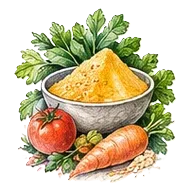
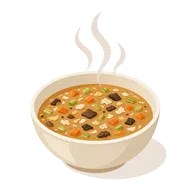
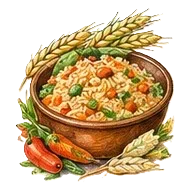
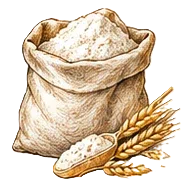
Usage Areas of Our Dried Products
General Information:
Your comments and feedback after using potato powder are very valuable to us for improving ourselves. Please consult the relevant professionals before consuming the product. Information on our website, such as nutritional values, benefits, possible risks, intended uses or side effects, was compiled from scientific sources while the site was being developed. Positive or negative comments, benefits and risks mentioned in the examples about the product may vary from person to person. Technical information such as photos, approximate waste rates, how to use it, how to consume it, intended uses, how it is made and how it is produced is provided to introduce the varieties and general characteristics of potato powder. The potato powder you purchase may differ because of factors such as the raw material variety, the drying technique, the raw material producer or the supply region. Wholesale quantities, prices, package weights, points of sale and areas of use may vary.